Trade
Trading Type
Spot
Trade crypto freely
Alpha
Points
Get promising tokens in streamlined on-chain trading
Pre-Market
Trade new tokens before they are officially listed
Margin
Magnify your profit with leverage
Convert & Block Trading
0 Fees
Trade any size with no fees and no slippage
Leveraged Tokens
Get exposure to leveraged positions simply
Futures
Futures
Points
Hundreds of contracts settled in USDT or BTC
Options
HOT
Trade European-style vanilla options
Unified Account
Maximize your capital efficiency
Demo Trading
Futures Kickoff
Get prepared for your futures trading
Futures Events
Participate in events to win generous rewards
Demo Trading
Use virtual funds to experience risk-free trading
Earn
Launch
CandyDrop
Collect candies to earn airdrops
Launchpool
Quick staking, earn potential new tokens
HODLer Airdrop
Hold GT and get massive airdrops for free
Launchpad
Be early to the next big token project
Alpha Points
New
Trade on-chain assets and enjoy airdrop rewards!
Futures Points
New
Earn futures points and claim airdrop rewards
Investment
Simple Earn
Earn interests with idle tokens
Auto-Invest
Auto-invest on a regular basis
Dual Investment
Buy low and sell high to take profits from price fluctuations
Soft Staking
Earn rewards with flexible staking
Crypto Loan
0 Fees
Pledge one crypto to borrow another
Lending Center
One-stop lending hub
VIP Wealth Hub
Customized wealth management empowers your assets growth
Private Wealth Management
Customized asset management to grow your digital assets
Quant Fund
Top asset management team helps you profit without hassle
Staking
Stake cryptos to earn in PoS products
BTC Staking
HOT
Stake BTC and earn 10% APR
GUSD Minting
Use USDT/USDC to mint GUSD for treasury-level yields


More


Modular Blockchains
Modular blockchains are designed to improve the network's performance, scalability, and customizability by separating the execution, settlement, consensus, and data availability layers contained within the blockchain into distinct "modules." This approach allows for the creation of new blockchains by selecting and assembling different modules, enhancing the network's flexibility and efficiency.
Articles (55)

Advanced
Deep Analysis of Modular Blockchains: How a Free Market Will Eventually Lead to Division of Labor and Cooperation
This article will provide an in-depth analysis of modular blockchains, covering the development history, current market landscape, and future directions.
2024-08-21 02:51:00

Beginner
Is Avail the Web3 Game-Changer? How This Modular Blockchain Stands Out Topic Tags: Modular Blockchain
Avail is a modular blockchain project led by Polygon's former co-founder Anurag Arjun, designed to address Web3 data availability issues by providing a secure and trust-minimized base layer.
2024-08-16 01:50:20

Intermediate
An Overview of Gelato (GEL)
Gelato has been a leader in smart contract automation services for years, offering various Web3 developer tools like Relay and VRF. Last year, they announced a business shift and introduced a new RaaS platform.
2024-06-26 13:59:49

Advanced
Inside Modular Blockchains — Tech Trends and Transformation
Modular blockchains address the performance bottlenecks and inefficiencies of traditional blockchains by breaking down functions into interchangeable modules. They offer advantages such as scalability, flexibility, resource utilization efficiency, and security, bringing greater transparency, security, and efficiency to various industries. Despite facing challenges, modular blockchains have already made an impact in sectors like finance, healthcare, and retail, and are seen as the designers of the future, tailoring specific needs for each structure. Let us view them as partners in progress, opening doors to a world of limitless possibilities.
2024-06-21 00:18:59

Advanced
What is Curvance 2025: All you need to know about Curvance
Discover Curvance in 2025, a leading modular DeFi protocol with enhanced P2P lending, stablecoin optimization, and multi-chain capabilities now supporting Solana, Avalanche, zkSync Era, and TON. Explore its $1.2B TVL, improved governance, regulatory compliance, and technological advancements including Protocol V3 and hybrid liquidity models in this comprehensive guide.
2024-06-20 00:42:31

Intermediate
AltLayer Explanation: Aggregation as a Service
Dewhales Research released a research report to delve into the mechanism and potential of AltLayer and explore how it can serve as a Rollup-as-a-Service solution in the rapidly developing blockchain environment. The article also introduces AltLayer’s Tokenomics, team and integration cases.
2024-06-17 08:55:50
Advanced
What is Nautilus Chain: All you need to know about Nautilus Chain
Dive into the world of Nautilus Chain and discover how its Layer 3 technology is transforming blockchain efficiency and scalability for a seamless Web3 experience.
2024-06-11 13:48:13

Beginner
What is Lava Network in 2025?
As of 2025, Lava Network has become a cornerstone infrastructure project in the blockchain ecosystem. This article explores Lava Network's journey from its airdrop announcement to its current status, covering its background, features, and structure. We'll examine its significant growth, supporting over 50 blockchains and processing 2+ billion daily RPC requests, as well as its market position with high token staking rates and technical advancements. The piece also highlights Lava's ecosystem development, including a $50 million allocation for supporting projects, solidifying its role as the universal data access layer for blockchain technology.
2024-06-11 13:26:24

Advanced
Ethereum and the innovator's dillema
Ethereum faces an innovation dilemma and requires fundamental changes. It has overly focused on modular innovations to the database. Currently, it seems to have reached its peak in terms of market capitalization and usage. Future development depends on deep structural and functional reforms.
2024-06-03 05:30:02

Beginner
Understanding Initia: A fully Customizable, Plug-and-Play Full-chain Modular Rollup Network
Initia is an innovative blockchain project that combines the functions of L1 and L2 to provide full-chain interoperability through a modular Rollup network. It aims to simplify the user experience in multi-chain environments and optimize developers' ability to build applications. Initia received $7.5 million in seed funding from companies including Delphi Ventures and Hack VC, with Binance Lab also participating in the investment. Through its L1 orchestration layer and multiple independent Rollup L2 layers, the project achieves cross-chain interoperation and seamless exchange of data assets. It also provides plug-and-play facilities to lower the developer threshold and accelerate application deployment.
2024-05-20 14:40:33
Intermediate
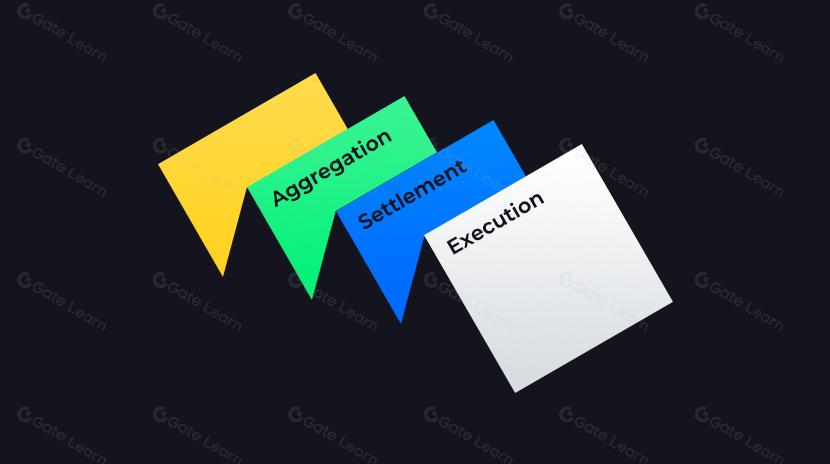
Aggregation, settlement, execution
The article explores the current developments and future trends of the execution layer, settlement layer, and aggregation layer in the modular blockchain stack within the cryptocurrency field. Although there have been many innovations in the data availability (DA) and ordering layers, the execution and settlement layers have only recently begun to receive attention. The article points out that while the shared sequencer space is highly competitive, the execution and settlement layers remain underexplored. Layer N, as a flexible and customizable execution layer, leverages the Move language and BlockSTM technology to improve throughput. The article also discusses the design of proof aggregation, a new architecture that can aggregate and settle between different proof systems, thereby enhancing efficiency and reducing costs. Finally, the article predicts that these innovations will bring better applications and development experiences to users.
2024-05-20 14:20:31
Advanced
Will ZK Eat The Modular Stack?
While Web3 is often described as “read, write, own”, we believe a better notion for the third iteration of the internet is “read, write, verify” given that the key benefit of public blockchains is guaranteed computation and easy verification that these guarantees were honored.
2024-05-13 15:06:24

Beginner
Particle Network: A Web3 Development Platform
Particle Network is a development platform for Web3, aimed at enhancing developer efficiency and accelerating the mass adoption of Web3. Its core product is an MPC-TSS-based login and wallet middleware that eliminates the need for end users to remember mnemonic phrases and pay gas fees, significantly lowering the barrier to Web3 adoption. This article will explore the Particle Network ecosystem, compare similar products, and analyze the network's prospects and future.
2024-05-13 10:06:01
Advanced
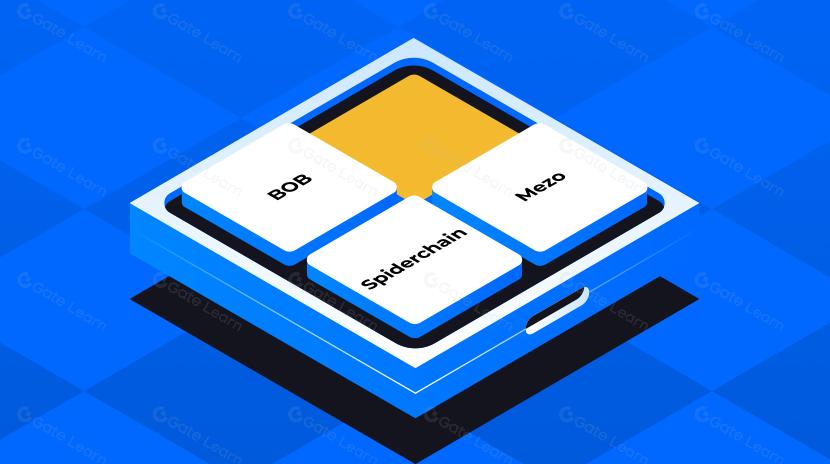
Review of Mezo, BOB, and Spiderchain
This article selects three L2 projects with a more Western background—Mezo, BOB (Build on Bitcoin), and Spiderchain (Botanix)—to further explore the pros and cons of layer 2 solutions and their impact on the BTC ecosystem.
2024-05-13 06:16:55
Intermediate
Blockchain-as-a-service (BaaS): An overview
Blockchain as a Service (BaaS) is a cloud service that allows organizations to build and run blockchain applications and smart contracts without the need to establish their own blockchain infrastructure. BaaS providers offer flexibility and accessibility of blockchain technology, aiming to democratize blockchain technology so that companies can develop blockchain applications at a reasonable cost.
2024-05-08 10:44:02

Your Gateway to Crypto World, Subscribe to Gate for a New Perspective